Keeping your pool’s pH within the correct range is essential to ensure the water is safe and comfortable. An unbalanced pH can cause discomfort such as skin and eye irritation, and it also affects the effectiveness of the chemicals used in pool maintenance. If you’re dealing with low pH levels, here’s how you can raise it effectively.
Methods to raise the pH of a pool
There are several effective ways to raise a pool’s pH quickly and efficiently. The best method will depend on your pool’s specific situation and the products you have available.
1. Use pH increasers (caustic soda or sodium carbonate)
One of the most common methods is using chemical pH increasers, such as caustic soda (sodium hydroxide) or sodium carbonate (soda ash). These products are specifically designed to raise pool water pH in a controlled way. It’s important to follow the manufacturer’s instructions and add the correct amount based on your pool’s size and current pH level.
2. Adjust the alkalinity with baking soda
Another method that can help raise the pH is adjusting the pool’s total alkalinity. Baking soda (sodium bicarbonate) is ideal for this. Increasing alkalinity can also help stabilise the pH and prevent frequent fluctuations. You should add it slowly to avoid overdosing, which could create other issues.
3. Aerate the water
Aeration is a natural and less invasive method to raise the pH, although it may take more time. This process involves oxygenating the water, either by stirring it, using water jets, or by systems that create movement and bubbles. Aeration helps remove dissolved carbon dioxide, which in turn increases the pH.
How to measure your pool’s pH
Before attempting to raise the pH, it’s essential to measure the current levels accurately. Most experts recommend keeping pool pH between 7.2 and 7.6, with 7.4 being ideal.
Testing methods
There are several ways to test the pool’s pH. Drop-test kits are a popular choice: simply fill a sample container with pool water, add the reagent drops, and compare the resulting colour to the pH chart.
Another easy option is test strips. Just dip them into the water and compare the colour to the scale provided.
For maximum precision, digital pH meters are also available, offering instant and accurate readings.
Recommended pH levels
As mentioned, the ideal pH range is between 7.2 and 7.6. A lower pH means the water is too acidic, which can harm swimmers and pool equipment. A higher pH can reduce chemical effectiveness and cause calcium deposits.
Effects of low pool pH
A low pH can create various issues, including:
- Skin and eye irritation: Acidic water can irritate swimmers’ eyes and skin.
- Equipment corrosion: Low pH can corrode metal parts such as ladders and pumps.
- Reduced chlorine efficiency: Chlorine becomes far less effective in acidic environments.
- Damage to the pool lining: Acidic water can degrade vinyl or painted surfaces over time.
For these reasons, monitoring and adjusting the pH regularly is essential.
Tips for maintaining pool pH
Proper pH maintenance is an ongoing task. Here are some tips to keep your pool’s pH stable and avoid future imbalances:
- Clean the filters: Regular filter cleaning ensures proper water circulation and prevents residue build-up that could affect pH.
- Monitor levels regularly: Test the pH frequently, especially during high-use months.
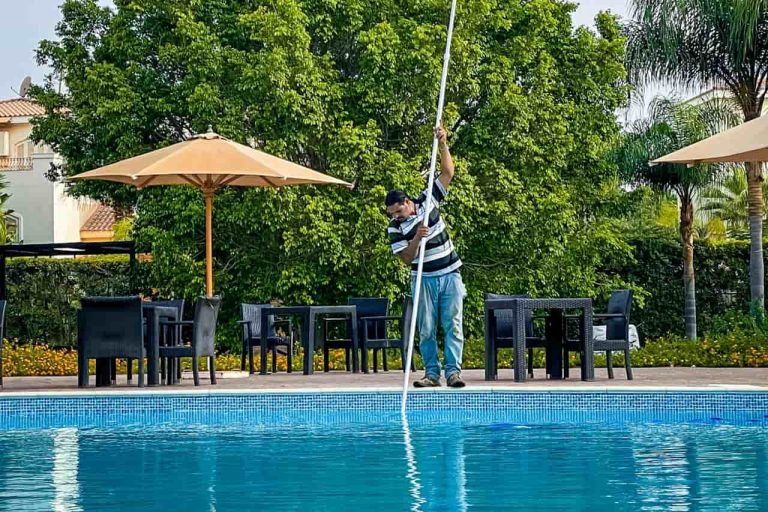
- Hire professionals: If you lack time or prefer expert support, consider hiring a maintenance service. At Guijarro Jardines, we can take care of your pool maintenance in Alicante.
With these methods and tips, you can ensure your pool’s pH stays within the optimal range, guaranteeing a safe and enjoyable swimming experience for everyone.